

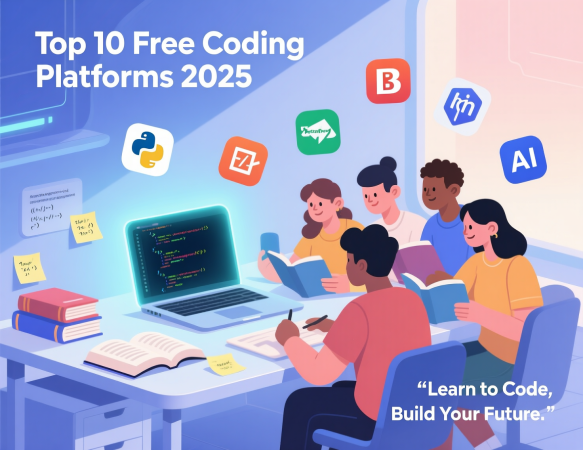
In today’s digital age, learning to code is a transformative skill that opens doors to countless career opportunities. For students, accessing high-quality, free coding resources is essential to mastering programming without financial strain. We’ve curated an exhaustive guide to the best free coding resources for students, designed to empower beginners, intermediates, and advanced learners. This article dives deep into platforms, tutorials, communities, and tools that provide unparalleled learning experiences, ensuring students can build robust programming skills in 2025.
- Why Free Coding Resources Matter for Students
- Top Platforms Offering Free Coding Resources for Students
- 1. Codecademy: Interactive Learning for Beginners
- 2. freeCodeCamp: Comprehensive and Community-Driven
- 3. Coursera and edX: University-Backed Courses
- 4. Khan Academy: Foundational Coding Skills
- Programming Language-Specific Free Coding Resources
- Python: The Versatile Language for Beginners
- JavaScript: Powering the Web
- Java: Enterprise-Ready Programming
- C++: For Systems and Game Development
- Interactive Coding Platforms for Hands-On Learning
- 1. Replit: Code in the Browser
- 2. CodePen: Front-End Experimentation
- 3. HackerRank: Competitive Programming
- Free Coding Communities and Forums
- Free Tools for Coding Success
- Free Coding Resources for Specific Fields
- Tips for Maximizing Free Coding Resources
- Challenges and Solutions in Using Free Coding Resources
- Challenge: Overwhelm from Too Many Resources
- Challenge: Lack of Structure
- Challenge: Staying Motivated
- Recommendations and Suggestions
- FAQs
Why Free Coding Resources Matter for Students
Coding is no longer a niche skill—it’s a cornerstone of modern education and career development. Students pursuing computer science, data science, web development, or even non-technical fields benefit from coding proficiency. However, paid courses and bootcamps can be prohibitively expensive. Free coding resources bridge this gap, offering accessible, high-quality learning materials. From interactive platforms to community-driven forums, these resources enable students to learn at their own pace, experiment with real-world projects, and connect with global coding communities.
Top Platforms Offering Free Coding Resources for Students
1. Codecademy: Interactive Learning for Beginners
Codecademy remains a cornerstone for students new to programming. Its free tier offers introductory courses in languages like Python, JavaScript, HTML, and CSS. These courses include interactive exercises, quizzes, and projects to reinforce learning.
- Key Features:
- Hands-on coding environments.
- Beginner-friendly tutorials with step-by-step guidance.
- Courses covering web development, data science, and more.
- Community forums for peer support.
- Why Students Love It: Codecademy’s intuitive interface and immediate feedback make it ideal for those starting their coding journey. Students can complete lessons in bite-sized chunks, fitting learning into busy schedules.
2. freeCodeCamp: Comprehensive and Community-Driven
freeCodeCamp is a nonprofit organization offering a vast array of free coding resources for students. Its curriculum spans HTML, CSS, JavaScript, React, Node.js, and even data visualization. Students earn certifications by completing real-world projects, such as building a tribute page or a personal portfolio.
More Read
- Key Features:
- Over 10,000 hours of free content.
- Project-based learning with portfolio-worthy outcomes.
- Active forum for troubleshooting and networking.
- Certifications recognized by employers.
- Why Students Love It: The platform’s focus on practical projects ensures students gain skills applicable to real-world scenarios. The community aspect fosters collaboration and motivation.
3. Coursera and edX: University-Backed Courses
Platforms like Coursera and edX partner with top universities (e.g., Stanford, MIT) to offer free access to introductory coding courses. While some courses require payment for certificates, students can audit materials for free.
- Key Features:
- Courses from institutions like Harvard and MIT.
- Topics include Python, Java, C++, and algorithms.
- Video lectures, assignments, and peer-reviewed projects.
- Flexible pacing for student schedules.
- Why Students Love It: These platforms provide academic rigor, making them ideal for students seeking structured, university-level content without tuition costs.
4. Khan Academy: Foundational Coding Skills
Khan Academy offers free courses in JavaScript, HTML/CSS, and computer science fundamentals. Its engaging approach uses animations and interactive challenges to teach coding concepts.
- Key Features:
- Beginner-friendly lessons with visual explanations.
- Focus on computational thinking and problem-solving.
- Progress tracking for self-paced learning.
- No prior experience required.
- Why Students Love It: Khan Academy’s clear explanations and gamified learning make it accessible for younger students or those new to coding.
Programming Language-Specific Free Coding Resources
Python: The Versatile Language for Beginners
Python is a favorite among students due to its readability and versatility. It’s used in web development, data science, automation, and more. Here are top free resources for learning Python:
- Python.org: The official Python website offers a comprehensive tutorial, documentation, and a beginner’s guide. Its interactive shell lets students experiment with code instantly.
- Automate the Boring Stuff with Python: This free online book and course teach practical Python applications, like automating tasks and web scraping.
- Google’s Python Class: A free course with video lectures, exercises, and coding challenges tailored for beginners.
- CS50’s Introduction to Computer Science: Harvard’s free course on edX includes Python modules with hands-on projects.
JavaScript: Powering the Web
JavaScript is essential for web development. Students can leverage these free resources to master it:
- MDN Web Docs: Mozilla’s comprehensive resource covers JavaScript, HTML, and CSS with tutorials, references, and examples.
- The Odin Project: A free, open-source curriculum focusing on JavaScript, HTML, and CSS for full-stack development.
- JavaScript.info: A detailed, free tutorial series covering JavaScript fundamentals to advanced topics like asynchronous programming.
- Eloquent JavaScript: A free online book with interactive exercises and deep dives into JavaScript concepts.
Java: Enterprise-Ready Programming
Java remains a staple in enterprise applications and Android development. Free resources include:
- Oracle’s Java Tutorials: Official tutorials covering Java basics, object-oriented programming, and advanced topics.
- Java Programming MOOC by University of Helsinki: A free, in-depth course with exercises and automated feedback.
- SoloLearn: A free mobile app with interactive Java lessons and quizzes.
C++: For Systems and Game Development
C++ is ideal for performance-intensive applications like games and operating systems. Free resources include:
- LearnCpp.com: A free, comprehensive tutorial series covering C++ from basics to advanced topics like memory management.
- CppReference: A detailed reference for C++ syntax and libraries, ideal for intermediate learners.
- Udemy Free C++ Courses: Select free courses offering video-based instruction and projects.
Interactive Coding Platforms for Hands-On Learning
1. Replit: Code in the Browser
Replit is a free, browser-based IDE that supports multiple languages, including Python, JavaScript, and Java. Students can write, run, and share code without installing software.
- Key Features:
- Collaborative coding for group projects.
- Built-in tutorials and templates.
- Support for 50+ programming languages.
- Free hosting for web projects.
- Why Students Love It: Replit’s accessibility and collaboration features make it perfect for classroom settings or solo learning.
2. CodePen: Front-End Experimentation
CodePen is a free platform for experimenting with HTML, CSS, and JavaScript. It’s ideal for students learning front-end development.
- Key Features:
- Live preview of code changes.
- Community projects for inspiration.
- Debugging tools for real-time feedback.
- Free account with unlimited pens.
- Why Students Love It: CodePen’s visual feedback helps students see the immediate impact of their code, fostering creativity.
3. HackerRank: Competitive Programming
HackerRank offers free coding challenges in Python, Java, C++, and more. It’s perfect for students preparing for technical interviews.
- Key Features:
- Challenges categorized by difficulty and topic.
- Leaderboards for motivation.
- Interview preparation kits.
- Community discussions for solutions.
- Why Students Love It: HackerRank’s gamified challenges make learning fun and prepare students for real-world coding interviews.
Free Coding Communities and Forums
1. Stack Overflow
Stack Overflow is a go-to platform for students seeking answers to coding questions. Its vast community of developers provides solutions to common and niche problems.
- Key Features:
- Searchable database of coding questions.
- Upvote system for quality answers.
- Tags for languages like Python, JavaScript, and Java.
- Free to use with optional account.
- Why Students Love It: The platform’s depth of knowledge helps students overcome coding roadblocks quickly.
2. Reddit: r/learnprogramming
The r/learnprogramming subreddit is a vibrant community where students can ask questions, share projects, and find free coding resources.
- Key Features:
- Beginner-friendly discussions.
- Weekly threads for resource sharing.
- Diverse topics from Python to algorithms.
- Supportive community feedback.
- Why Students Love It: The informal tone and peer support make it an approachable space for learners.
3. Discord Coding Communities
Discord hosts numerous free coding servers, such as The Coding Den and freeCodeCamp’s server, where students can collaborate and learn.
- Key Features:
- Real-time chat with developers.
- Channels for specific languages like JavaScript and Python.
- Hackathons and coding challenges.
- Mentorship opportunities.
- Why Students Love It: Discord’s interactive nature fosters a sense of belonging and immediate support.
Free Tools for Coding Success
1. Visual Studio Code
Visual Studio Code (VS Code) is a free, open-source code editor supporting multiple languages. Its extensions enhance functionality for students.
- Key Features:
- Syntax highlighting and auto-completion.
- Extensions for Python, JavaScript, and more.
- Integrated terminal for running code.
- Git integration for version control.
- Why Students Love It: VS Code’s customization and lightweight design make it a favorite for coding projects.
2. GitHub: Version Control and Collaboration
GitHub offers free repositories for students to store and share code. The GitHub Student Developer Pack includes additional perks.
- Key Features:
- Free public and private repositories.
- Collaboration tools for team projects.
- Access to premium tools via the Student Pack.
- Showcase portfolios for job applications.
- Why Students Love It: GitHub’s industry-standard tools prepare students for professional workflows.
3. LeetCode: Algorithm Practice
LeetCode provides free coding challenges to improve algorithmic thinking, a critical skill for technical interviews.
- Key Features:
- Problems in Python, Java, C++, and more.
- Mock interviews for practice.
- Discussion boards for solutions.
- Free tier with hundreds of problems.
- Why Students Love It: LeetCode’s focus on algorithms helps students excel in competitive programming and job interviews.
Free Coding Resources for Specific Fields
Web Development
Web development combines HTML, CSS, and JavaScript to create stunning websites. Free resources include:
- W3Schools: Comprehensive tutorials on HTML, CSS, JavaScript, and frameworks like React.
- The Net Ninja: Free YouTube tutorials covering web development technologies.
- CSS-Tricks: A blog with free guides on CSS techniques and best practices.
Data Science
Data science leverages Python and tools like Pandas and NumPy. Free resources include:
- Kaggle: Free datasets, tutorials, and competitions in Python and R.
- DataCamp’s Free Courses: Introductory courses in Python for data science.
- Google’s Data Analytics Certificate: Free auditing of beginner-friendly data science content.
Mobile App Development
Mobile app development is accessible with free resources for Java (Android) and Swift (iOS):
- Android Developer Fundamentals: Google’s free course on Java and Kotlin for Android.
- Swift.org: Apple’s free tutorials on Swift for iOS development.
- Udacity’s Android Basics: Free nanodegree with Java projects.
Tips for Maximizing Free Coding Resources
- Set Clear Goals: Define whether you want to learn Python, build a website, or prepare for interviews.
- Create a Study Schedule: Dedicate consistent time to learning, using platforms like Codecademy or freeCodeCamp.
- Build Projects: Apply skills by creating portfolios, apps, or games to showcase on GitHub.
- Join Communities: Engage with Stack Overflow, Reddit, or Discord for support and networking.
- Practice Daily: Use HackerRank or LeetCode to hone problem-solving skills.
- Stay Updated: Follow blogs like CSS-Tricks or freeCodeCamp’s newsletter for industry trends.
Challenges and Solutions in Using Free Coding Resources
Challenge: Overwhelm from Too Many Resources
With countless free coding resources, students may feel paralyzed by choice.
- Solution: Start with one platform (e.g., freeCodeCamp) and focus on a single language like Python. Gradually explore additional resources as skills improve.
Challenge: Lack of Structure
Free resources often lack the structure of paid courses.
- Solution: Follow a curriculum-based platform like The Odin Project or CS50, which provide clear learning paths.
Challenge: Staying Motivated
Learning to code can be daunting without guidance.
- Solution: Join communities like r/learnprogramming or Discord servers to stay inspired and accountable.
Recommendations and Suggestions
We recommend starting with freeCodeCamp for its comprehensive curriculum and project-based learning. Supplement with Codecademy for interactive exercises and HackerRank for interview prep. For specific languages, use Python.org for Python, MDN Web Docs for JavaScript, and LearnCpp.com for C++. Consistently practice, build projects, and engage with communities to maximize learning outcomes. The GitHub Student Developer Pack is a must for accessing premium tools for free.
FAQs
- What are the best free coding resources for students?
Platforms like freeCodeCamp, Codecademy, and Coursera offer comprehensive, free coding courses. - Can I learn Python for free?
Yes, resources like Python.org, Automate the Boring Stuff, and Google’s Python Class are free. - Is freeCodeCamp good for beginners?
Absolutely, its project-based curriculum is beginner-friendly and covers JavaScript, HTML, and more. - How can I practice coding for free?
Use HackerRank, LeetCode, or Replit for free coding challenges and projects. - Are there free resources for web development?
Yes, W3Schools, The Odin Project, and CodePen offer free tutorials and tools. - What’s the best free code editor for students?
Visual Studio Code is lightweight, customizable, and supports multiple languages. - Can I learn JavaScript for free?
MDN Web Docs, JavaScript.info, and freeCodeCamp provide free JavaScript tutorials. - Are free coding resources enough to get a job?
Yes, with consistent practice, project-building, and community engagement, they can prepare you for jobs. - How do I stay motivated while learning to code?
Join communities like Reddit’s r/learnprogramming or Discord servers for support. - What’s the GitHub Student Developer Pack?
A free package offering premium tools and services for students. - Are there free resources for data science?
Kaggle and DataCamp’s free courses are excellent for Python-based data science. - Can I learn mobile app development for free?
Yes, Android Developer Fundamentals and Swift.org offer free tutorials. - How long does it take to learn coding with free resources?
It varies, but 6-12 months of consistent learning can build solid skills. - Are free coding certifications valuable?
Certifications from freeCodeCamp and Coursera are recognized by many employers. - What’s the best way to start coding as a student?
Begin with Python on Codecademy or freeCodeCamp and build small projects.