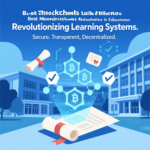



The landscape of higher education is undergoing a seismic shift, driven by technological advancements that promise to enhance security, efficiency, and trust. Among these innovations, blockchain technology stands out as a transformative force, particularly in the realm of credential verification. We explore how universities worldwide are adopting blockchain for verification (Blockchain for Credential Verification), revolutionizing the issuance, storage, and validation of academic credentials. This comprehensive guide delves into the mechanics, benefits, case studies, challenges, and future potential of blockchain in higher education, offering an in-depth look at how this technology is reshaping academic integrity and trust.
- Understanding Blockchain Technology in Education
- Why Universities Are Adopting Blockchain for Verification
- How Blockchain Works for Credential Verification
- Case Studies: Universities Leading the Way in Blockchain Verification
- Benefits of Blockchain for Verification in Higher Education
- Enhanced Security and Fraud Prevention
- Instant Verification
- Global Accessibility
- Cost Reduction
- Student Empowerment
- Interoperability and Standardization
- Technical Implementation of Blockchain in Universities
- Choosing a Blockchain Platform
- System Architecture
- Integration with Existing Systems
- Governance and Standards
- Challenges in Adopting Blockchain for Verification
- Technical Complexity
- Cost of Implementation
- Regulatory and Legal Issues
- Scalability
- Interoperability
- Privacy Concerns
- Future Potential of Blockchain in Higher Education
- Lifelong Learning Records
- Accreditation and Institutional Verification
- Research and Data Sharing
- Smart Contracts for Administrative Processes
- Micro-Credentials and Skills Verification
- Global Perspectives on Blockchain Adoption
- Recommendations for Universities Adopting Blockchain
- Suggestions for Future Research
- FAQs About Blockchain for Verification in Universities (Blockchain for Credential Verification)
Understanding Blockchain Technology in Education
Blockchain is a decentralized, immutable ledger that records transactions across a network of computers, ensuring transparency, security, and tamper-proof data. Each block in the chain contains data, a timestamp, and a cryptographic hash linked to the previous block, creating an unalterable record. In higher education, blockchain is used to securely store and verify academic credentials, such as degrees, diplomas, certificates, and transcripts, eliminating the vulnerabilities of traditional paper-based or centralized digital systems.
We see universities adopting blockchain for verification to address longstanding issues like credential fraud, slow verification processes, and lack of interoperability. By leveraging blockchain’s core features—decentralization, immutability, transparency, and security—institutions can provide verifiable, portable credentials that stakeholders, including employers and other universities, can trust instantly.
Key Features of Blockchain in Credential Verification
-
Immutability: Once a credential is recorded, it cannot be altered, ensuring authenticity.
-
Decentralization: Data is stored across multiple nodes, reducing reliance on a single authority.
-
Transparency: Authorized parties can access and verify credentials in real-time.
-
Security: Cryptographic encryption protects data from unauthorized access.
-
Traceability: Every transaction is logged, allowing for full audit trails.
-
Programmability: Smart contracts automate processes like issuance and verification.
These features make blockchain for verification a game-changer, enabling universities to streamline operations, reduce costs, and enhance trust among stakeholders.
More Read

Why Universities Are Adopting Blockchain for Verification
The traditional system of issuing and verifying academic credentials is fraught with challenges. Paper-based certificates are prone to forgery, loss, or damage, while digital databases often lack interoperability and are vulnerable to cyberattacks. Manual verification processes are time-consuming, often taking weeks, and involve multiple intermediaries, increasing costs and risks of errors. We observe that blockchain for verification addresses these pain points by offering a secure, efficient, and globally accessible solution.
Challenges in Traditional Credential Verification
-
Fraud and Forgery: Studies estimate that up to 25% of job applicants misrepresent academic credentials, with fake diplomas costing employers billions annually.
-
Time Delays: Verifying a degree often requires contacting institutions directly, a process that can take weeks or months.
-
Administrative Burden: Universities and employers dedicate significant resources to manual verification, diverting focus from core activities.
-
Lack of Standardization: Different institutions use varying formats, complicating cross-border verification.
-
Data Privacy Risks: Centralized databases are susceptible to breaches, compromising sensitive student information.
Blockchain for verification mitigates these issues by creating a tamper-proof, decentralized ledger accessible to authorized parties worldwide. Universities like MIT, the University of Melbourne, and the University of Nicosia have pioneered this approach, demonstrating its efficacy in real-world settings.
How Blockchain Works for Credential Verification
To understand how blockchain for verification functions in universities, we must examine the technical process. When a university issues a credential, it creates a digital record containing details like the student’s name, degree, issuance date, and institution. This record is hashed—a process that converts data into a unique, fixed-length string—and stored on the blockchain. The hash serves as a digital fingerprint, ensuring the credential’s integrity.
The Blockchain Verification Process
-
Issuance: The university generates a digital credential and records it on the blockchain, often embedding it in a smart contract for automation.
-
Hashing and Storage: The credential is hashed and stored across multiple nodes, ensuring redundancy and security.
-
Verification: Employers or other institutions access the blockchain via a public key or QR code to verify the credential’s authenticity instantly.
-
Audit Trail: Every access or modification attempt is logged, providing full traceability.
This process eliminates intermediaries, reduces verification time from weeks to seconds, and ensures credentials are tamper-proof. For example, MIT’s Blockcerts initiative uses this model to issue digital diplomas that graduates can share securely with employers.
Case Studies: Universities Leading the Way in Blockchain Verification
We highlight several institutions that have successfully implemented blockchain for verification, showcasing diverse approaches and outcomes.
MIT and Blockcerts
The Massachusetts Institute of Technology (MIT) launched Blockcerts in 2017, an open-standard platform for issuing and verifying blockchain-based credentials. MIT issues digital diplomas that graduates can store in a digital wallet, sharing them with employers via a secure link or QR code. The system uses the Bitcoin blockchain for its robust security and immutability.
-
Impact: Verification time reduced from weeks to seconds.
-
Scalability: Blockcerts is open-source, allowing other institutions to adopt the framework.
-
Global Recognition: Employers worldwide can verify MIT credentials without contacting the university.
University of Melbourne
The University of Melbourne became the first Australian university to issue blockchain-based credentials in 2017. Using a proprietary platform, the university stores degrees and transcripts on a decentralized ledger, enabling instant verification by employers and other institutions.
-
Efficiency Gains: Reduced administrative workload by 30%, according to university reports.
-
Student Benefits: Graduates can share credentials globally without bureaucratic hurdles.
-
Fraud Prevention: Immutable records eliminate the risk of forged diplomas.
University of Nicosia
The University of Nicosia in Cyprus was an early adopter, issuing blockchain-based diplomas since 2014. It also accepts Bitcoin for tuition, showcasing its commitment to blockchain innovation. The university’s proprietary system ensures credentials are verifiable worldwide, enhancing graduate employability.
-
Innovation: First university to certify degrees on the Bitcoin blockchain.
-
Global Mobility: Supports international students by simplifying cross-border verification.
-
Cost Savings: Reduced verification costs by eliminating manual processes.
University of Rome “Tor Vergata”
The University of Rome “Tor Vergata” implemented a blockchain-based system for digital diploma issuance and verification, focusing on enhancing trust and efficiency. The system uses Hyperledger Fabric, a permissioned blockchain, to ensure privacy while maintaining transparency.
-
Trust Enhancement: Stakeholders trust the system due to its immutable records.
-
Administrative Efficiency: Streamlined diploma issuance, reducing processing time by 40%.
-
Scalability: The system supports multiple academic programs and credentials.
These case studies demonstrate how blockchain for verification is not a theoretical concept but a practical solution already transforming higher education.
Benefits of Blockchain for Verification in Higher Education
The adoption of blockchain for verification offers numerous advantages, impacting students, universities, employers, and other stakeholders.
Enhanced Security and Fraud Prevention
Blockchain’s immutability ensures that once a credential is recorded, it cannot be altered or falsified. Each record is cryptographically signed, making forgery virtually impossible. A 2024 study by the University of Chicago found that blockchain-based systems reduced credential fraud by 95% in pilot programs.
Instant Verification
Traditional verification processes can take weeks, involving multiple phone calls, emails, and document exchanges. Blockchain enables instant verification through a secure link or QR code, allowing employers to confirm credentials in seconds. This is particularly beneficial for time-sensitive hiring processes.
Global Accessibility
Blockchain credentials are portable and verifiable worldwide, eliminating the need for notarization or apostille certifications. This is critical for international students and professionals, as seen in Portugal, where Brazilian students face delays due to manual verification processes.
Cost Reduction
By automating verification and eliminating intermediaries, universities and employers save significant resources. The University of Melbourne reported a 30% reduction in administrative costs after adopting blockchain. These savings can be redirected to academic programs or student services.
Student Empowerment
Blockchain gives students ownership of their credentials through digital wallets. Graduates can share their degrees, transcripts, or micro-credentials with employers or other institutions without relying on university intermediaries. This empowers students to control their academic records.
Interoperability and Standardization
Blockchain platforms like Blockcerts and EduCTX promote interoperability by creating standardized formats for credentials. This allows universities worldwide to share and verify records seamlessly, supporting student mobility and lifelong learning.
Technical Implementation of Blockchain in Universities
Implementing blockchain for verification requires careful planning, including selecting the right blockchain platform, integrating with existing systems, and ensuring stakeholder buy-in. We explore the technical aspects and considerations.
Choosing a Blockchain Platform
Universities can choose between public, private, or hybrid blockchains based on their needs:
-
Public Blockchains: Like Bitcoin or Ethereum, these offer maximum transparency and immutability but may raise privacy concerns due to public access.
-
Private Blockchains: Such as Hyperledger Fabric, these provide controlled access, ideal for institutions prioritizing data privacy.
-
Hybrid Blockchains: Combine public and private features, balancing transparency and privacy, as seen in the University of Cañete’s prototype.
System Architecture
A typical blockchain-based verification system includes:
-
Nodes: Computers in the network that store and validate the blockchain.
-
Smart Contracts: Automated scripts that execute issuance and verification processes.
-
Digital Wallets: Tools for students to store and share credentials.
-
APIs: Interfaces for integrating blockchain with university databases.
-
QR Codes: Provide quick access to verifiable credentials.
For example, the University of Cañete’s prototype uses Python and Docker to create a hybrid blockchain with six nodes, ensuring scalability and security.
Integration with Existing Systems
Universities must integrate blockchain with their student information systems (SIS) and learning management systems (LMS). This requires:
-
Data Mapping: Aligning credential data with blockchain formats.
-
API Development: Creating interfaces for seamless data transfer.
-
User Training: Educating staff and students on blockchain usage.
Governance and Standards
Effective implementation requires governance frameworks to define roles, access rights, and data standards. The European Credit Transfer and Accumulation System (ECTS) integration, as proposed by EduCTX, ensures compatibility across institutions.
Challenges in Adopting Blockchain for Verification
While blockchain for verification offers transformative potential, universities face several challenges in adoption.
Technical Complexity
Implementing blockchain requires expertise in distributed systems, cryptography, and smart contracts. Many universities lack the in-house skills, necessitating partnerships with technology providers like Learning Machine or EduChain.
Cost of Implementation
Initial setup costs, including infrastructure, software, and training, can be significant. However, long-term savings from reduced administrative costs often outweigh these expenses, as seen in the University of Melbourne’s case.
Regulatory and Legal Issues
Blockchain credentials must comply with regional data protection laws, such as GDPR in Europe. Universities must ensure that student data is handled securely and that credentials are legally recognized.
Scalability
Public blockchains like Bitcoin face scalability issues, with high transaction costs and slower processing times. Private or hybrid blockchains, like Hyperledger Fabric, offer better scalability but require careful configuration.
Interoperability
While platforms like Blockcerts promote standardization, many universities use proprietary systems, complicating integration. Collaborative initiatives, such as the Red Blue project in Spain, aim to address this by involving multiple institutions.
Privacy Concerns
Blockchain’s transparency can conflict with privacy requirements. Solutions like Hyperledger Fabric’s privacy-preserving protocols or zero-knowledge proofs can mitigate this, ensuring only authorized parties access sensitive data.
Future Potential of Blockchain in Higher Education
The future of blockchain for verification extends beyond credentials to transform various aspects of higher education.
Lifelong Learning Records
Blockchain can create a verifiable lifetime transcript, storing all educational achievements, including degrees, micro-credentials, and professional certifications. This supports lifelong learning and career mobility, as proposed by Gartner in 2019.
Accreditation and Institutional Verification
Blockchain can streamline institutional accreditation by recording compliance data transparently. The Red Blue project in Spain uses blockchain to validate university accreditations, reducing fraud and enhancing trust.
Research and Data Sharing
Universities like the University of Utah are using blockchain to democratize access to research data, enabling secure, transparent sharing across institutions. This fosters collaboration and accelerates scientific discovery.
Smart Contracts for Administrative Processes
Smart contracts can automate tasks like student admissions, credit transfers, and tuition payments. Woolf University, a blockchain-powered institution, uses smart contracts to reduce tuition costs and increase faculty remuneration.
Micro-Credentials and Skills Verification
As the demand for micro-credentials grows, blockchain can verify short courses, badges, and skills certifications. Platforms like Credly and Accredible are already issuing blockchain-based badges, enhancing employability.
Global Perspectives on Blockchain Adoption
We examine how different regions are embracing blockchain for verification in higher education.
North America
The U.S. leads in blockchain adoption, with institutions like MIT, ECPI University, and the University of Utah pioneering initiatives. The focus is on credential verification, research data sharing, and cost reduction.
Europe
Europe emphasizes interoperability and standardization, with projects like EduCTX and the Red Blue project promoting cross-institutional collaboration. The University of Rome “Tor Vergata” and Technische Hochschule Lubeck are notable examples.
Asia-Pacific
Australia’s University of Melbourne and Japan’s Sony Global Education are advancing blockchain for credential verification and global record sharing. The region focuses on enhancing student mobility and employability.
Middle East
The United Arab Emirates’ Musadaqa platform, developed by Ankabut and EduChain, supports digital record issuance and verification, addressing regional challenges like fraud and administrative inefficiencies.
Africa and Latin America
Emerging economies are exploring blockchain to combat diploma mills and improve access to education. The University of Cañete in Peru and initiatives in South Africa highlight blockchain’s potential in developing regions.
Recommendations for Universities Adopting Blockchain
To successfully implement blockchain for verification, we recommend the following:
-
Start with Pilot Programs: Test blockchain with a small group of credentials to assess feasibility and address technical challenges.
-
Partner with Experts: Collaborate with blockchain providers like Learning Machine, EduChain, or Blockcerts to leverage expertise.
-
Ensure Interoperability: Adopt open standards like Blockcerts or EduCTX to ensure compatibility with other institutions.
-
Train Stakeholders: Educate staff, students, and employers on blockchain usage to ensure smooth adoption.
-
Address Privacy: Use privacy-preserving protocols like Hyperledger Fabric or zero-knowledge proofs to comply with data protection laws.
-
Monitor Costs: Balance initial investment with long-term savings, focusing on scalable platforms to reduce transaction costs.
-
Engage Stakeholders: Involve students, employers, and regulators in the design process to ensure buy-in and trust.
Suggestions for Future Research
-
Scalability Solutions: Investigate ways to improve blockchain scalability for large-scale credential issuance.
-
Privacy Enhancements: Develop advanced privacy-preserving techniques, such as zero-knowledge proofs, for educational blockchains.
-
Cost-Benefit Analysis: Conduct studies to quantify the long-term financial impact of blockchain adoption.
-
Global Standards: Advocate for universal standards to ensure interoperability across regions and institutions.
-
Integration with AI: Explore how blockchain and artificial intelligence can work together to enhance credential verification and personalization.
FAQs About Blockchain for Verification in Universities (Blockchain for Credential Verification)
-
What is blockchain for verification in universities?
Blockchain for verification involves using a decentralized ledger to issue, store, and validate academic credentials, ensuring security and authenticity. -
How does blockchain prevent credential fraud?
Blockchain’s immutability and cryptographic hashing make it impossible to alter credentials once recorded, reducing fraud. -
Which universities use blockchain for verification?
MIT, University of Melbourne, University of Nicosia, and University of Rome “Tor Vergata” are among the pioneers. -
What is Blockcerts?
Blockcerts is an open-standard platform developed by MIT for issuing and verifying blockchain-based credentials. -
How does blockchain improve verification speed?
Blockchain allows instant verification via secure links or QR codes, eliminating manual processes. -
Is blockchain secure for storing credentials?
Yes, blockchain uses cryptographic encryption and decentralization to protect data from unauthorized access. -
What are the costs of implementing blockchain?
Initial setup costs include infrastructure and training, but long-term savings from automation often offset these expenses. -
Can blockchain credentials be used globally?
Yes, blockchain credentials are portable and verifiable worldwide, supporting international student mobility. -
What are smart contracts in blockchain verification?
Smart contracts are automated scripts that execute issuance and verification processes, reducing administrative workload. -
How does blockchain ensure data privacy?
Privacy-preserving protocols like Hyperledger Fabric or zero-knowledge proofs protect sensitive student data. -
What challenges do universities face in adopting blockchain?
Challenges include technical complexity, initial costs, regulatory compliance, scalability, and interoperability. -
Can blockchain support micro-credentials?
Yes, blockchain can verify micro-credentials and badges, enhancing employability in non-traditional education. -
How does blockchain benefit employers?
Employers can verify credentials instantly, reducing hiring risks and administrative costs. -
What is the future of blockchain in education?
Blockchain will support lifelong learning records, accreditation, research data sharing, and automated administrative processes. -
How can universities start using blockchain?
Universities should start with pilot programs, partner with experts, and adopt interoperable standards like Blockcerts.