

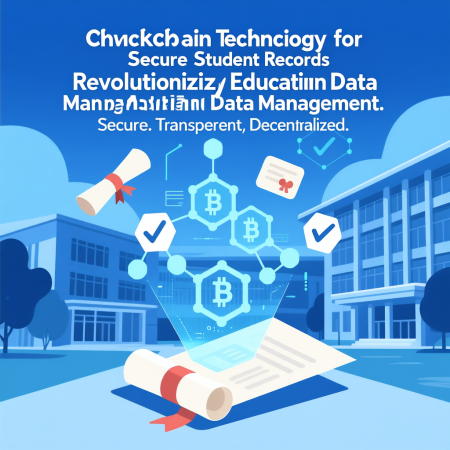
In the rapidly evolving landscape of educational technology, blockchain technology for secure student records offers a transformative solution to the challenges of data security, privacy, and accessibility in academic institutions. As schools, colleges, and universities handle vast amounts of sensitive student information—ranging from grades and transcripts to certifications and personal details—ensuring the integrity and security of this data is paramount. We explore how blockchain technology can redefine the management of student records, providing unmatched security, transparency, and efficiency. This comprehensive guide delves into the mechanics, benefits, and real-world applications of blockchain in education, positioning it as a cornerstone for modernizing academic record-keeping.
- Understanding Blockchain Technology in Education
- The Need for Secure Student Records
- Benefits of Blockchain for Student Records Management
- Enhanced Security and Privacy
- Tamper-Proof Records
- Streamlined Credential Verification
- Portability and Accessibility
- Cost Efficiency
- Global Interoperability
- Real-World Applications of Blockchain in Education
- Digital Diplomas and Certificates
- Micro-Credentialing and Lifelong Learning
- Secure Transcript Management
- Student Identity Verification
- Cross-Institutional Collaboration
- Challenges and Considerations in Implementing Blockchain
- Technical Complexity
- Scalability
- Cost of Implementation
- Regulatory Compliance
- Interoperability with Legacy Systems
- Steps to Implement Blockchain for Student Records
- Case Studies: Blockchain in Action
- Case Study 1: MIT’s Blockcerts Initiative
- Case Study 2: University of Nicosia
- Case Study 3: Southern New Hampshire University
- Future Potential of Blockchain in Education
- Recommendations for Educational Institutions
- Frequently Asked Questions (FAQs)
Understanding Blockchain Technology in Education
Blockchain technology, originally developed as the foundation for cryptocurrencies like Bitcoin, is a decentralized, immutable ledger system that ensures data integrity through cryptographic security. In the context of education, blockchain technology for secure student records leverages these features to create tamper-proof, transparent, and accessible records. Unlike traditional centralized databases, which are vulnerable to hacking, data breaches, and unauthorized alterations, blockchain distributes data across a network of nodes, making it nearly impossible to manipulate without consensus.
How Blockchain Works for Student Records
At its core, blockchain operates as a chain of blocks, where each block contains a set of data—such as a student’s academic achievements or personal information—secured with cryptographic hashes. These hashes link each block to the previous one, forming an unalterable chain. For student records, this means:
- Immutable Records: Once a grade, degree, or certificate is recorded on the blockchain, it cannot be altered retroactively without altering every subsequent block, which requires network consensus.
- Decentralized Storage: Data is stored across multiple nodes, reducing the risk of a single point of failure or data loss due to server crashes or cyberattacks.
- Cryptographic Security: Each record is encrypted, ensuring only authorized parties with private keys can access or verify the information.
- Transparency and Traceability: Blockchain provides a transparent audit trail, allowing institutions and employers to verify the authenticity of credentials instantly.
By implementing blockchain, educational institutions can create a secure, verifiable, and portable system for managing student records, eliminating the inefficiencies and vulnerabilities of traditional systems.
More Read

The Need for Secure Student Records
The education sector faces increasing pressure to safeguard student data amid rising cyber threats. In 2023 alone, over 2.6 billion personal records were exposed globally due to data breaches, with educational institutions being prime targets. Traditional record-keeping systems, often reliant on centralized servers or paper-based documentation, are prone to:
- Data Breaches: Hackers can exploit vulnerabilities in centralized databases to steal sensitive information, such as Social Security numbers or academic records.
- Fraudulent Credentials: Fake diplomas and altered transcripts undermine the credibility of educational institutions and employers.
- Inefficient Verification Processes: Verifying academic credentials often involves time-consuming manual processes, delaying hiring decisions or academic transfers.
- Data Loss: Natural disasters, system failures, or human errors can lead to the permanent loss of critical student records.
Blockchain technology for secure student records addresses these challenges by offering a decentralized, tamper-proof solution that enhances security, streamlines verification, and ensures data permanence.
Benefits of Blockchain for Student Records Management
The adoption of blockchain technology in education brings a multitude of advantages, transforming how institutions manage and share student data. Below, we outline the key benefits in detail:
Enhanced Security and Privacy
Blockchain’s cryptographic framework ensures that student records are encrypted and accessible only to authorized parties. Private keys, unique to each user, grant access to specific data, while public keys allow for verification without compromising privacy. This dual-key system prevents unauthorized access and protects sensitive information, such as personal details or financial records, from cyberattacks.
Tamper-Proof Records
The immutability of blockchain ensures that once a record is added—whether it’s a grade, certificate, or transcript—it cannot be altered or deleted without network consensus. This eliminates the risk of fraudulent modifications, ensuring the authenticity of academic credentials. For example, a university issuing a degree on the blockchain can guarantee its legitimacy, as any attempt to forge it would be immediately detectable.
Streamlined Credential Verification
Verifying academic credentials is often a cumbersome process involving multiple intermediaries, such as registrars or third-party agencies. Blockchain enables instant verification through a shared ledger, allowing employers, universities, or other institutions to confirm the authenticity of a student’s credentials with a single click. This reduces administrative overhead and accelerates processes like job applications or academic transfers.
Portability and Accessibility
Students often face challenges when transferring credits or sharing credentials across institutions or borders. Blockchain creates a portable, digital wallet for students, where they can store and share their academic records securely. This empowers students to control their data and share it with employers or institutions without relying on intermediaries.
Cost Efficiency
Traditional record-keeping systems require significant resources for maintenance, security, and manual verification processes. Blockchain reduces these costs by automating verification, eliminating intermediaries, and minimizing the need for physical storage or redundant systems. Over time, institutions can save millions by transitioning to blockchain-based solutions.
Global Interoperability
As education becomes increasingly globalized, institutions need systems that can operate across borders. Blockchain’s decentralized nature ensures that records are universally accessible and verifiable, regardless of geographic location. This is particularly beneficial for international students or professionals seeking opportunities abroad.
Real-World Applications of Blockchain in Education
The potential of blockchain technology for secure student records is already being realized by institutions worldwide. Below, we explore real-world examples and use cases that demonstrate its transformative impact:
Digital Diplomas and Certificates
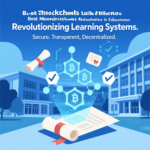
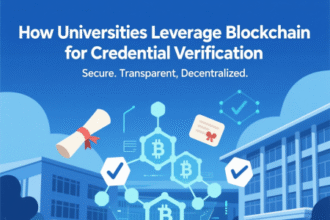
Several universities have adopted blockchain to issue digital diplomas and certificates. For instance, the Massachusetts Institute of Technology (MIT) launched the Blockcerts initiative in 2017, allowing graduates to receive digital diplomas on a blockchain. These credentials are verifiable, tamper-proof, and easily shareable, reducing the risk of diploma fraud and simplifying employer verification.
Micro-Credentialing and Lifelong Learning
Blockchain supports micro-credentialing, where students earn digital badges or certificates for specific skills or courses. Platforms like Credly and Badgr use blockchain to issue and verify micro-credentials, enabling learners to showcase their expertise to employers. This is particularly valuable in industries like technology, where continuous learning is essential.
Secure Transcript Management
Universities like the University of Nicosia in Cyprus have implemented blockchain for transcript management. Students can access their transcripts securely, share them with employers or other institutions, and benefit from instant verification. This eliminates the need for manual transcript requests and reduces administrative delays.
Student Identity Verification
Blockchain can enhance student identity verification, ensuring that only authorized individuals access educational services or records. For example, blockchain-based digital IDs can prevent impersonation during online exams or secure access to campus facilities.
Cross-Institutional Collaboration
Blockchain enables seamless collaboration between institutions by creating a shared ledger for student records. For instance, a student transferring from one university to another can share their academic history instantly, without the need for lengthy credit transfer processes. This fosters greater mobility and flexibility in education.
Challenges and Considerations in Implementing Blockchain
While the benefits of blockchain are compelling, implementing it in education requires careful consideration of technical, financial, and regulatory challenges. We address these below to provide a balanced perspective:
Technical Complexity
Blockchain implementation requires significant technical expertise, including knowledge of distributed ledger systems, smart contracts, and cryptographic protocols. Institutions must invest in training staff or partnering with blockchain providers to ensure successful deployment.
Scalability
As the volume of student records grows, blockchain networks must scale to handle large datasets without compromising performance. While modern blockchains like Ethereum 2.0 and Hyperledger Fabric offer improved scalability, institutions must choose platforms that align with their needs.
Cost of Implementation
Initial setup costs for blockchain systems can be high, including expenses for infrastructure, software development, and integration with existing systems. However, these costs are often offset by long-term savings in administrative efficiency and security.
Regulatory Compliance
Educational institutions must comply with data protection regulations, such as the General Data Protection Regulation (GDPR) in Europe or the Family Educational Rights and Privacy Act (FERPA) in the United States. Blockchain’s immutability can complicate compliance with “right to be forgotten” laws, requiring innovative solutions like off-chain storage for sensitive data.
Interoperability with Legacy Systems
Many institutions rely on legacy systems for record-keeping, which may not be compatible with blockchain. Transitioning to a blockchain-based system requires careful planning to ensure seamless integration and data migration.
Steps to Implement Blockchain for Student Records
To successfully adopt blockchain technology for secure student records, institutions should follow a structured approach. Below, we outline a step-by-step guide:
- Assess Institutional Needs: Identify specific pain points in current record-keeping systems, such as security vulnerabilities or inefficient verification processes.
- Choose a Blockchain Platform: Select a blockchain platform suited for education, such as Ethereum, Hyperledger Fabric, or specialized solutions like Blockcerts.
- Develop Smart Contracts: Create smart contracts to automate processes like credential issuance, verification, and data sharing.
- Integrate with Existing Systems: Ensure compatibility with existing student information systems through APIs or middleware.
- Train Staff and Stakeholders: Provide training to administrators, faculty, and students on using blockchain-based systems.
- Pilot and Scale: Start with a pilot project, such as issuing digital diplomas, before scaling to broader applications like transcript management.
- Monitor and Optimize: Continuously monitor the system for performance, security, and user feedback, making improvements as needed.
Case Studies: Blockchain in Action
To illustrate the practical impact of blockchain, we highlight three case studies of institutions successfully implementing this technology:
Case Study 1: MIT’s Blockcerts Initiative
MIT’s Blockcerts platform uses the Bitcoin blockchain to issue digital diplomas. Graduates receive a verifiable, tamper-proof credential that they can share with employers or other institutions. The platform has reduced verification times from weeks to seconds, enhancing efficiency and trust.
Case Study 2: University of Nicosia
The University of Nicosia in Cyprus was one of the first institutions to issue academic certificates on a blockchain. By storing transcripts and degrees on a decentralized ledger, the university ensures their authenticity and enables students to share them globally with ease.
Case Study 3: Southern New Hampshire University
Southern New Hampshire University partnered with IBM to pilot a blockchain-based system for micro-credentials. The initiative allows students to earn digital badges for skills like data analysis or leadership, which are verifiable by employers, boosting career opportunities.
Future Potential of Blockchain in Education
The future of blockchain technology for secure student records is bright, with emerging trends poised to further transform education:
- Integration with Artificial Intelligence: Combining blockchain with AI can enhance data analytics, enabling personalized learning experiences while maintaining record security.
- Decentralized Learning Platforms: Blockchain can support decentralized education platforms, where students earn credentials from multiple providers, stored securely in a single digital wallet.
- Smart Contracts for Automation: Smart contracts can automate administrative tasks, such as tuition payments, enrollment, or credit transfers, reducing paperwork and costs.
- Global Credential Recognition: Blockchain can standardize credential formats across countries, simplifying international education and employment processes.
Recommendations for Educational Institutions
To maximize the benefits of blockchain, we recommend the following:
- Start Small: Begin with a pilot project, such as issuing digital certificates, to test blockchain’s feasibility.
- Partner with Experts: Collaborate with blockchain providers or consultants to navigate technical and regulatory challenges.
- Engage Stakeholders: Involve students, faculty, and employers in the design process to ensure user-friendly solutions.
- Prioritize Scalability: Choose blockchain platforms that can handle growing data volumes without compromising performance.
- Stay Compliant: Ensure blockchain systems align with data protection regulations to avoid legal issues.
Frequently Asked Questions (FAQs)
- What is blockchain technology for secure student records? Blockchain technology creates a decentralized, tamper-proof ledger for storing and managing student records, ensuring security and authenticity.
- How does blockchain ensure the security of student records? Blockchain uses cryptographic encryption and decentralization to protect data from unauthorized access or tampering.
- Can blockchain prevent academic fraud? Yes, blockchain’s immutability ensures that credentials like diplomas or transcripts cannot be forged or altered.
- What are the benefits of blockchain for students? Students gain portable, secure, and verifiable records, simplifying processes like job applications or academic transfers.
- How does blockchain streamline credential verification? Blockchain allows instant verification through a shared ledger, eliminating manual processes and intermediaries.
- Are there real-world examples of blockchain in education? Yes, institutions like MIT, the University of Nicosia, and Southern New Hampshire University use blockchain for diplomas and transcripts.
- What challenges do institutions face when adopting blockchain? Challenges include technical complexity, scalability, cost, and regulatory compliance.
- Can blockchain support micro-credentialing? Yes, blockchain enables secure issuance and verification of micro-credentials for specific skills or courses.
- How does blockchain improve data privacy? Blockchain uses private keys to restrict access to authorized parties, protecting sensitive student information.
- Is blockchain compatible with existing systems? With proper integration, blockchain can work alongside legacy systems using APIs or middleware.
- What is the cost of implementing blockchain in education? Costs vary but include infrastructure, development, and training, offset by long-term savings.
- Can blockchain be used for student identity verification? Yes, blockchain-based digital IDs can secure access to exams, campus services, or online platforms.
- How does blockchain support international students? Blockchain enables globally verifiable credentials, simplifying cross-border education and employment.
- What is Blockcerts, and how does it work? Blockcerts is a blockchain platform for issuing and verifying digital credentials, used by institutions like MIT.
- What is the future of blockchain in education? Future applications include AI integration, decentralized learning platforms, and global credential standardization.